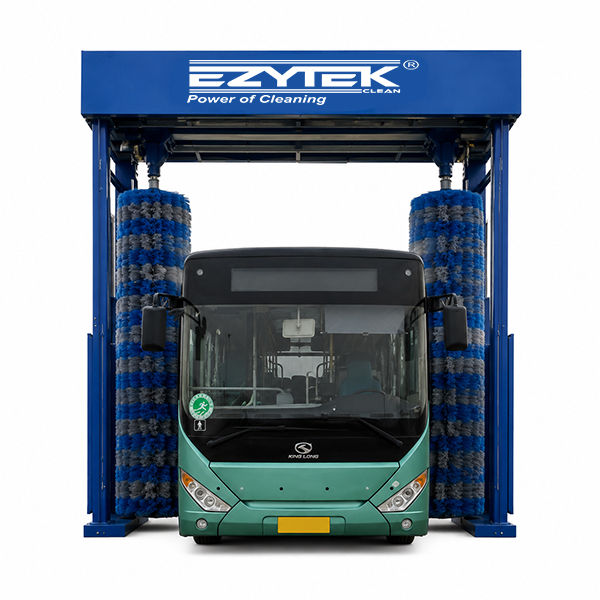
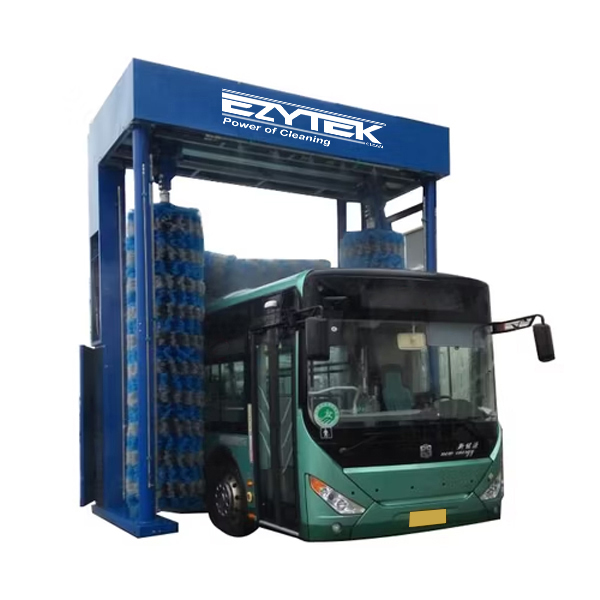
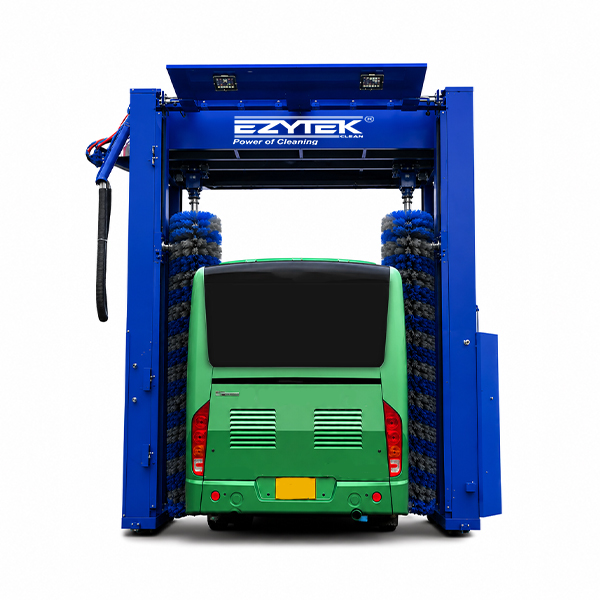
An automatic bus wash plant is a heavy-duty, mechanized cleaning facility specifically designed to wash the exterior (and sometimes the undercarriage) of large commercial vehicles like city buses, school buses, and coaches.
Designed to replace slow and labor-intensive manual washing, these systems can clean a bus in just 5 to 10 minutes using a fraction of the water required for hand washing.
Key Types of Wash Systems
Automatic bus washes generally fall into two categories:
- Rollover (Gantry) Systems: The bus remains stationary, and an automated gantry equipped with brushes and water jets moves back and forth over the vehicle.
- Drive-Through Systems: The bus slowly drives forward (or is pulled by a conveyor) through a series of fixed or moving brushes and spray arches.
Standard Cleaning Stages
A typical wash cycle involves several automated phases:
- Undercarriage Wash: High-pressure jets beneath the bus blast away road salt, mud, and debris from the chassis and wheels.
- Pre-Wetting & Detergent Application: Water and specialized, eco-friendly detergents or color foams are sprayed evenly over the bus to loosen tough grime.
- Brushing: Systems typically use a 3-brush (one horizontal roof brush and two vertical side brushes) or 5-brush configuration. These brushes are made of soft, non-abrasive foam or specialized nylon to prevent scratches while contouring to the shape of the bus.
- High-Pressure Rinse: High-velocity water jets rinse away all the remaining soap and loosened dirt.
- Drying (Optional): High-velocity air blowers or air nozzles remove the bulk of the rinse water from the windows and body to reduce spotting.
Core Features & Benefits
- Consistency: Every part of the bus, including hard-to-reach roofs and contours, is cleaned uniformly every time.
- Water Conservation: Modern plants use high-pressure, low-volume nozzles and water recycling systems (Effluent Treatment Plants – ETP) to filter and reuse 80-90% of the wash water.
- Efficiency: They drastically reduce labor, usually requiring only one or two operators to supervise the machine, and can process 6 to 30 buses per hour, depending on the system type.
- Corrosion Resistance: The structural frames and mechanisms of these plants are typically made from stainless steel or hot-dip galvanized steel to withstand continuous exposure to water and cleaning chemicals.
Gallery




Reviews
There are no reviews yet.